Phone: +971 50 162 0135
Email: ghalib@ghalibconsulting.com

 Byadmin
Imagine you’re launching a new fintech app in Riyadh. You have two critical questions: How many potential users would pay for a premium feature, and why would they find it valuable? The first question seeks a number; the second seeks a story. This, at its core, is the fundamental choice between quantitative vs qualitative research—a decision that can make or break your market entry in the dynamic landscapes of the Middle East.
Too many businesses in the UAE and Saudi Arabia treat research as a checkbox activity, opting for the most familiar method rather than the most strategic. The result? Misallocated budgets, misguided campaigns, and missed opportunities. In markets defined by rapid digitization, cultural nuance, and ambitious national visions like Saudi Vision 2030 and the UAE Centennial 2071, guessing is not an option.
Having guided numerous clients through this decision at Ghalib Consulting, I’ve seen that the most successful leaders don’t just run surveys or focus groups—they build a research strategy. Let’s cut through the jargon and explore which method your business truly needs to de-risk decisions and accelerate growth.
Before we dive into application, let’s crystallize the distinction.
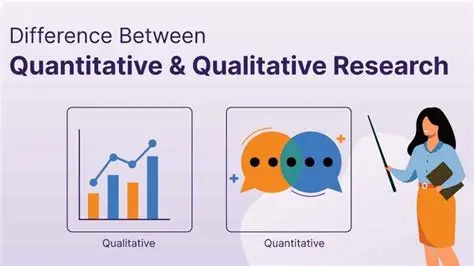
Quantitative Research is about the “what” and “how many.” It’s structured, statistical, and objective. You use it to measure, count, and project. Think large-scale surveys, website analytics, or point-of-sale data. Its power is in its generalizability. A well-structured survey of 500 Dubai residents can tell you, with a specific confidence level, the percentage interested in a new service.
Qualitative Research is about the “why” and “how.” It’s exploratory, descriptive, and subjective. You use it to understand motivations, emotions, and underlying reasons. Think in-depth interviews, focus groups, or observational studies. Its power is in its depth. A series of conversations with SME owners in Al Khobar can uncover the unspoken frustrations with current banking solutions that no survey question would ever capture.
Here’s a quick comparison to frame the discussion:
| Feature | Quantitative Research | Qualitative Research |
|---|---|---|
| Data Type | Numerical, structured | Textual, video, observational |
| Question | What? How many? How often? | Why? How? |
| Sample Size | Large, representative | Small, focused |
| Analysis | Statistical, predictive | Thematic, interpretive |
| Outcome | Generalizable trends & metrics | Deep contextual understanding |
| Best For | Validating hypotheses, measuring KPIs | Exploring new ideas, understanding behavior |
Choose quantitative methods when you need to measure, benchmark, or forecast. This is the language of boards and investors; it provides the hard evidence to support scale.
The Bottom Line: Use quantitative research when you have a clear hypothesis to test (e.g., “Offering instalment payments will increase sales by 20%”) and need statistically valid proof to make a high-stakes investment decision.
Opt for qualitative methods when you are in the “unknown” zone. It’s your tool for discovery, innovation, and understanding complex human contexts—especially critical in culturally rich markets.
The Bottom Line: Use qualitative research when you are exploring a new customer segment, debugging a complex problem, or need to understand the emotional and cultural drivers behind decisions. As Harvard Business School professor Clayton Christensen emphasized, you must understand the “job to be done” for a customer—a task for which qualitative insight is indispensable.
The most insightful research strategy for businesses in the Gulf isn’t an either/or but a “yes, and.” This integrated approach, often called a mixed-methods strategy, is where true strategic insight is born.
This loop turns data into profound wisdom. You move from anecdotes to evidence, and then back to human-level understanding.
Conducting research in the UAE and KSA requires specific considerations:
The debate between quantitative vs qualitative research is not about finding a winner. It’s about understanding that they are different tools in your strategic toolkit. One is a telescope, giving you the broad landscape; the other is a microscope, revealing the intricate details. Using the wrong tool, or using one in isolation, leaves you with an incomplete—and often costly—picture.
In the ambitious, fast-moving economies of the Gulf, where personal relationships intertwine with digital transformation, this integrated approach to insight is not an academic exercise. It’s a competitive necessity.
Does your business have the insights it needs to navigate the Saudi or UAE market with confidence?
At Ghalib Consulting, we help businesses move beyond guesswork. We design and execute tailored mixed-methods research strategies that deliver the clear numbers and the deep understanding you need to validate opportunities, connect with customers, and drive sustainable growth.
Don’t base your next big decision on a gut feeling or incomplete data. Contact us today for a free consultation, and let’s build a research plan that gives you the clarity to act with certainty.