Phone: +971 50 162 0135
Email: ghalib@ghalibconsulting.com

 Byadmin
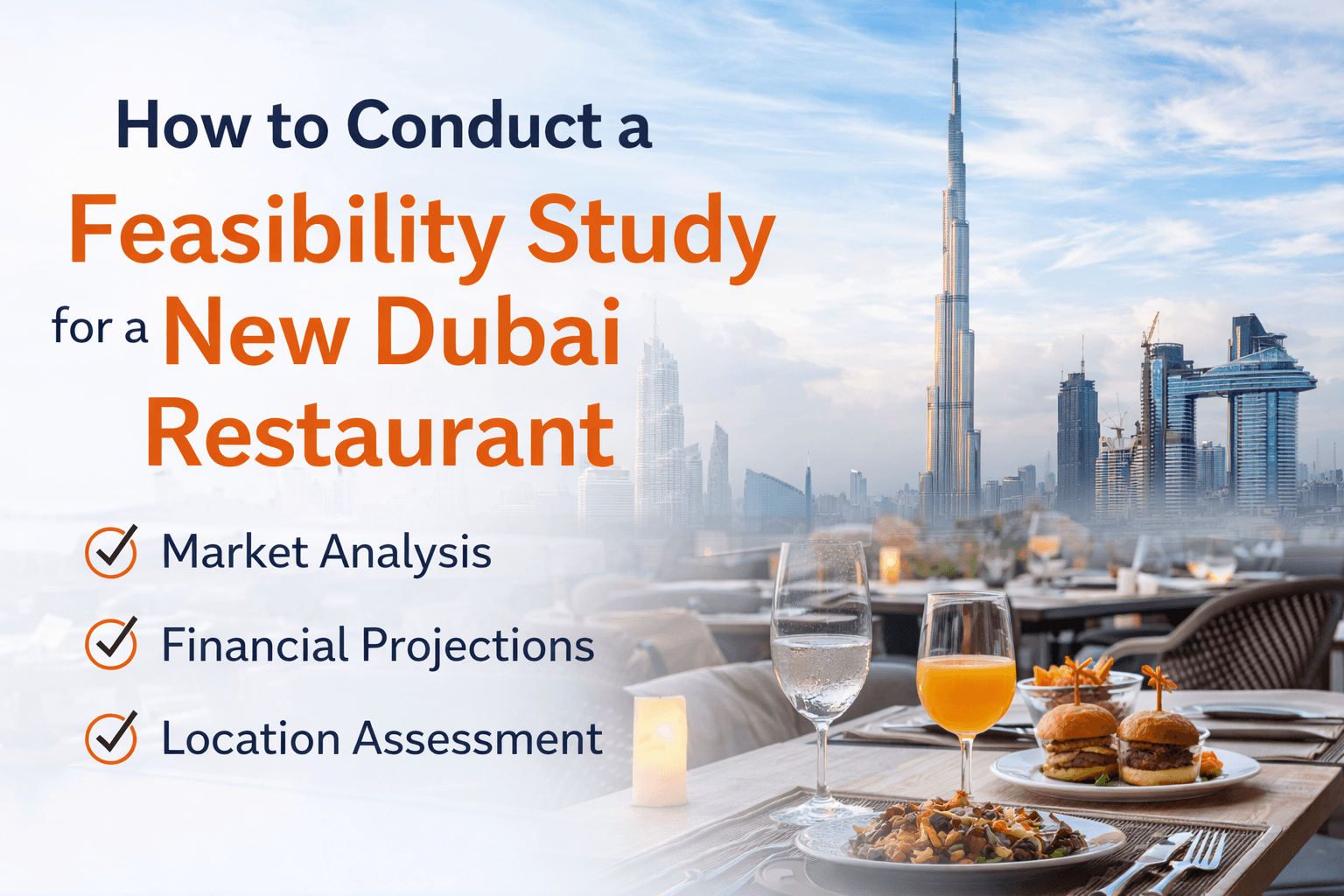
Picture this: you’re walking through Dubai’s vibrant streets, past glittering towers and bustling souks, when you notice a “For Rent” sign on a prime corner location. A vision flashes in your mind—an elegant fusion restaurant with rooftop views of the Burj Khalifa. The excitement is palpable, but before you sign that lease or design your menu, there’s one critical document standing between your dream and reality: a comprehensive feasibility study.
In Dubai’s hyper-competitive F&B landscape, passion alone won’t sustain a restaurant. What separates success stories from shuttered spaces is rigorous planning. A proper feasibility study isn’t just paperwork—it’s your roadmap through Dubai’s unique regulatory maze, shifting consumer trends, and intense market competition.
Dubai’s restaurant scene is a fascinating paradox. The city boasts one of the world’s highest densities of restaurants per capita, yet new establishments open almost daily. According to Dubai’s Department of Economy and Tourism, the emirate welcomed over 300 new dining concepts in 2023 alone. This creates both opportunity and intense pressure.
The city’s diners are equally complex—cosmopolitan, discerning, and constantly seeking novelty. A successful feasibility study must account for these nuances, answering fundamental questions: Is there genuine demand for your concept? Can you compete with established giants? Will regulations allow your vision?
Dubai isn’t a single market—it’s a collection of micro-markets. What works in Dubai Marina might fail in Al Quoz. Your study must examine:
Demographic Dynamics
Competition Mapping
Trend Analysis
They say the three most important factors in restaurant success are “location, location, location.” In Dubai, this deserves its own research chapter.
Foot Traffic vs. Destination Dining
Regulatory Zoning
The Hidden Costs of “Prime” Locations
| Location Type | Average Rent (AED/sqft/year) | Minimum Contract | Hidden Costs |
|---|---|---|---|
| Shopping Malls | 350-600 | 5-10 years | Common area charges, mandatory mall hours |
| Hotel Spaces | Revenue share (15-25%) | 3-5 years | Shared kitchen restrictions, hotel policies |
| Street-Level | 200-400 | 3-5 years | Outdoor seating permits, signage limitations |
| Free Zones | 180-350 | 2-3 years | Limited customer access, delivery challenges |
Many aspiring restaurateurs calculate start-up costs then stop. Your feasibility study must project 3-5 years ahead.
Startup Cost Breakdown
Revenue Projections
Expense Realities
Staffing in a Transient Market
Supply Chain Complexities
Seasonal Adaptation
No feasibility study is complete without honest risk evaluation:
Market Saturation Risks
Regulatory Compliance
Economic Sensitivity
Consider “Zest,” a healthy café that opened in Business Bay in 2022. Their feasibility study revealed something surprising: while the area had 27 coffee shops, none offered substantial gluten-free breakfast options. They capitalized on this gap, but their study also warned about lunchtime parking challenges. Their solution? A partnership with nearby offices for dedicated pickup lockers.
Then there’s “Alchemy,” a fine-dining concept that overlooked one critical element in their initial study: the impact of summer construction on their JBR location. Two months of blocked access during their first summer nearly sank them. A thorough study would have identified this seasonal pattern in municipal work permits.
While some elements of your feasibility study can be self-researched, consider professional assistance for:
At Ghalib Consulting, we’ve guided numerous F&B entrepreneurs through Dubai’s complexities. Our approach combines rigorous financial analysis with on-the-ground market intelligence, creating feasibility studies that are both numerically sound and practically actionable.
A compelling feasibility study should leave you with either clear confidence or clear concerns—both valuable outcomes. If your study reveals insurmountable challenges, consider it a success: you’ve avoided potential financial disaster. If it shows promising potential, you now have a detailed blueprint for securing investment and navigating launch.
Remember that in Dubai’s restaurant scene, thorough preparation isn’t just advisable—it’s essential. The most successful restaurateurs here aren’t just great chefs or hosts; they’re meticulous planners who respect the power of data while never losing sight of the human experience they’re creating.
At Ghalib Consulting, we specialize in turning culinary visions into viable business plans. Our team brings decades of Middle Eastern market experience combined with rigorous financial expertise to create feasibility studies that investors trust and realities respect.
📞 Contact us today for a confidential consultation about your restaurant concept. Let’s build something remarkable together—one well-researched step at a time.